.jpg)

Social Media
Follow us on our social media channels


Contact Us
Thank you! We will get back to you as soon as possible.
Oops! Something went wrong while submitting the form.

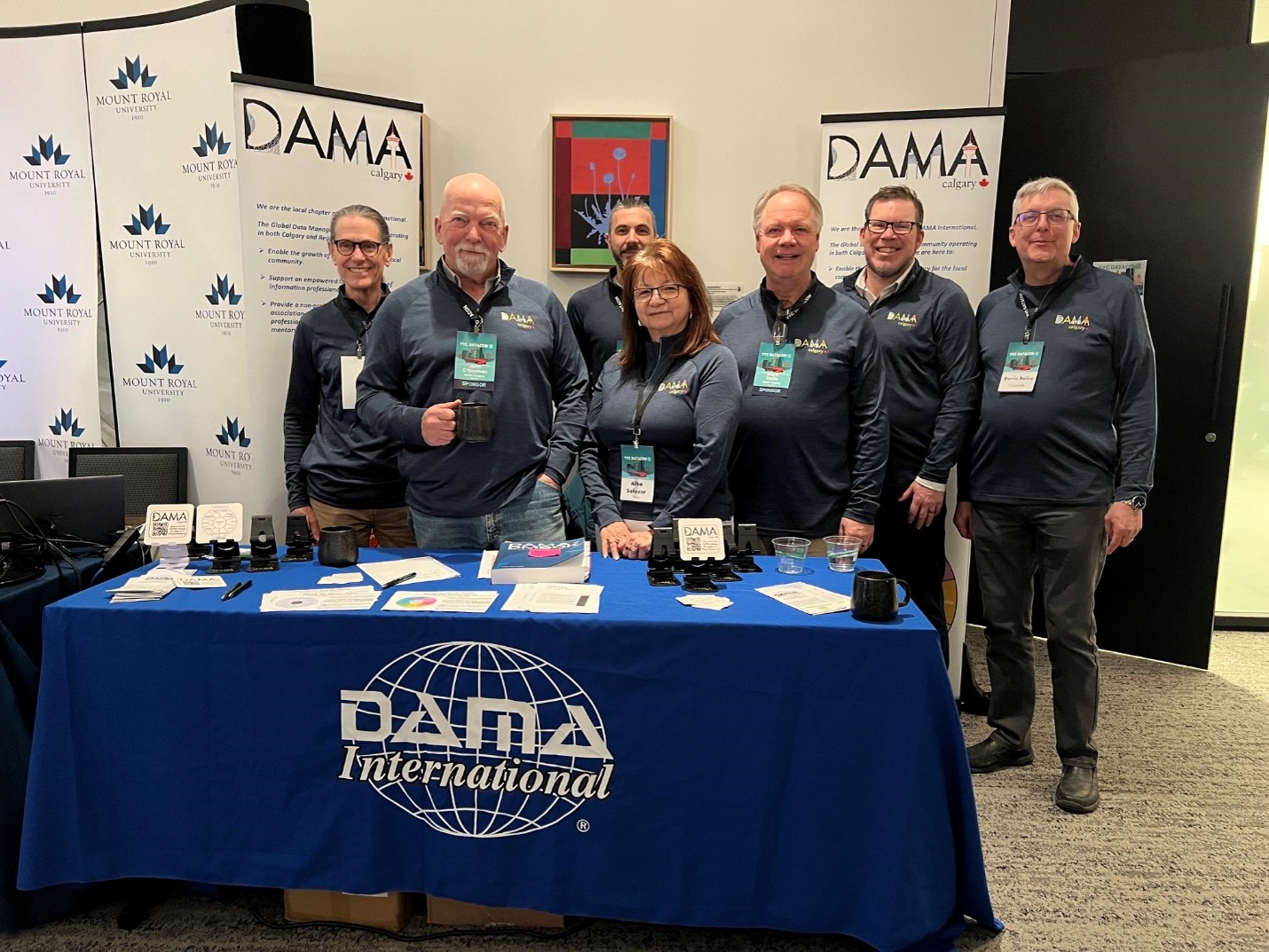
Calgary’s data community is made stronger by organizations that focus on different partsof the profession. DAMA Calgary plays an important role by supporting thepeople working on data governance, quality, architecture, analytics readiness,and the broader practices that help organizations use data well.
As the local chapter of DAMA International, DAMA Calgary focuses on data management:the practices that help organizations collect, govern, organize, protect, anduse data effectively. While many data communities focus on emerging tools andtechnologies, DAMA's work is centred on the foundations that make those toolsuseful in the first place.
For Calgary's data community, that makes DAMA an important resource. Througheducational events, workshops, certification support, and networkingopportunities, the chapter gives professionals a place to continue developingtheir skills while learning from others facing similar challenges acrossdifferent organizations and industries.
One of DAMA Calgary's core activities is hosting educational events throughout theyear.
These sessions cover a wide range of topics relevant to modern data teams, includingdata governance, data quality, data architecture, automation, and analytics.While the subject matter varies from event to event, the focus is typicallypractical. The goal is not simply to talk about data management in theory, butto explore how these ideas are being applied inside real organizations.
A major strength of DAMA Calgary's programming is its local perspective. Many sessionsfeature practitioners from Calgary organizations who share lessons learned fromprojects they have worked on directly. That gives attendees a chance to hearwhat worked, what proved difficult, and what others might apply in their ownenvironments.
Recent sessions have explored topics such as intelligent automation, personalknowledge management, data transformation, and the challenges of moving frommanual reporting processes toward more scalable approaches. These kinds ofpresentations are especially useful because they connect broader datamanagement principles to the day-to-day realities of working professionals.
For attendees, the value is twofold. First, the sessions provide exposure tocurrent practices and ideas in the data management field. Second, they create asetting where professionals can meet others working through similar issues. Forpeople in small data teams, or those trying to build stronger data practiceswithin their own organizations, that combination of learning and connection canbe especially valuable.
For many professionals, DAMA is closely associated with the Certified Data ManagementProfessional designation, commonly known as the CDMP.
The CDMP is one of the most recognized certifications in the data management field. Itis based on the Data Management Body of Knowledge, or DMBOK, which provides abroad framework for understanding the major disciplines within data management.
For professionals who want to formalize their knowledge, the CDMP can be a usefulcredential. It covers areas such as governance, quality, architecture,modelling, metadata, security, integration, and business intelligence. Even forthose who are not immediately pursuing certification, the CDMP pathway canprovide a structured way to understand the field more clearly.
DAMA Calgary supports professionals interested in certification by connecting themwith study opportunities, resources, and examination events. This gives localpractitioners a clearer path to preparing for the exam and engaging with otherswho are working toward the same goal.
Most recently, the chapter hosted a "Pay If You Pass" CDMP examinationsession. This format helped reduce the financial barrier for professionalsinterested in earning the credential, making certification more accessible formembers of the local data community.
For anyone looking to deepen their understanding of data management or demonstratetheir knowledge through a recognized credential, DAMA Calgary's support aroundCDMP certification is one of the chapter's most valuable offerings.
Inaddition to regular presentations, DAMA also hosts workshops focused onpractical skill development.
Thesesessions typically go deeper than a standard event format. Rather than onlylistening to a presentation, participants have more opportunity to work throughconcepts, ask questions, and discuss implementation challenges with instructorsand peers.
YYC DataSociety recently partnered with DAMA Calgary on “Building Data Foundations:From Messy Data to Scalable Analytics”, a full-day workshop delivered atPlatform Calgary. The session focused on the foundational work required beforeorganizations can successfully scale analytics initiatives.
Theworkshop explored practical approaches to improving data quality, strengtheninggovernance, and preparing data for more effective reporting and analytics. Formany organizations, these are the areas where analytics projects either gainmomentum or begin to stall. Before dashboards, automation, or advancedanalytics can create lasting value, the underlying data needs to be trusted,understood, and managed properly.
Eventslike this are a good example of DAMA Calgary's role in the broader ecosystem.They’re not only creating space for discussion, but also helping professionalsbuild the practical skills needed to improve data practices inside their ownorganizations.
Like all community organizations, DAMA Calgary also serves an important networkingfunction.
Data management is a broad discipline. It touches governance, compliance, analytics,engineering, architecture, operations, reporting, and business strategy.Because of that, DAMA events tend to attract professionals from a wide range ofroles and industries.
That mix is part of what makes the community useful. A data analyst may be workingthrough reporting challenges. A data engineer may be focused on pipelines andarchitecture. A governance lead may be trying to build better policies andownership structures. A business leader may be looking for ways to make betterdecisions with more reliable information.
DAMA Calgary creates opportunities for those people to be in the same room.
For individuals working in smaller teams, or for those who may be the onlydata-focused person in their organization, these connections can beparticularly valuable. The ability to talk with others who understand similarchallenges is often just as useful as the formal event content itself.
DAMA Calgary is often associated with data governance and data managementprofessionals, but its events are relevant to a much broader audience.
Business analysts, data analysts, data engineers, data architects, project managers,product owners, technology leaders, and business leaders can all benefit fromthe topics covered. Anyone responsible for improving data quality, buildingreporting processes, supporting analytics initiatives, or helping anorganization become more data-driven is likely to find relevant content withinthe DAMA community.
The workshops are especially useful for professionals who want to better understandhow data practices fit together. Data management is not a single skill orfunction. It is a collection of related disciplines that determine howeffectively an organization can use its information.
DAMA Calgary provides a place to explore those disciplines in a structured butaccessible way.
DAMA Calgary is led by Marc Nolte, Ron Legere, and a dedicated volunteer board committed to advancing data literacy and data management practices throughoutthe region.
Whether you are interested in professional certification, technical learning, industrybest practices, or simply connecting with other data professionals, DAMACalgary offers several ways to get involved.
For Calgary's data community, the chapter plays an important role by supporting the foundational knowledge and practices that strong data work depends on. As organizations continue investing in analytics, automation, and AI, that foundation will only become more important.
To learnmore about upcoming events, certification opportunities, and ways to get involved, visit dama-calgary.org

Follow us on our social media channels